Some people collect cathedrals. I collect the moment a trail opens up and 300 feet of water drops out of the sky. Twelve years chasing waterfalls from Iceland to Chilean Patagonia taught me this: the best ones aren’t the tallest or the most photographed. They’re the ones you earn with mud, switchbacks, and a little doubt about whether you’re still on the right path. This guide covers three hikes that reward that effort, plus the hard-won logistics that separate a great day from a miserable one.
Overview
The planet has no shortage of waterfalls. The ones worth hiking to share a few traits. They sit far enough from a parking lot that the crowds thin out. They’re fed by something reliable rather than a seasonal trickle. And the approach itself is part of the payoff. I’m focusing this guide on three regions where waterfall hiking is a genuine art form — Iceland’s south coast, the Pacific Northwest, and the Norwegian fjord country around Geiranger. Each has a distinct character, and each demands a different kind of preparation.
Water volume and terrain tie them together. These aren’t delicate ribbons on a postcard. They’re loud, cold, and occasionally dangerous, and the trails that reach them tend to be steep, wet, and poorly marked in places. That’s exactly why they’re worth your time.
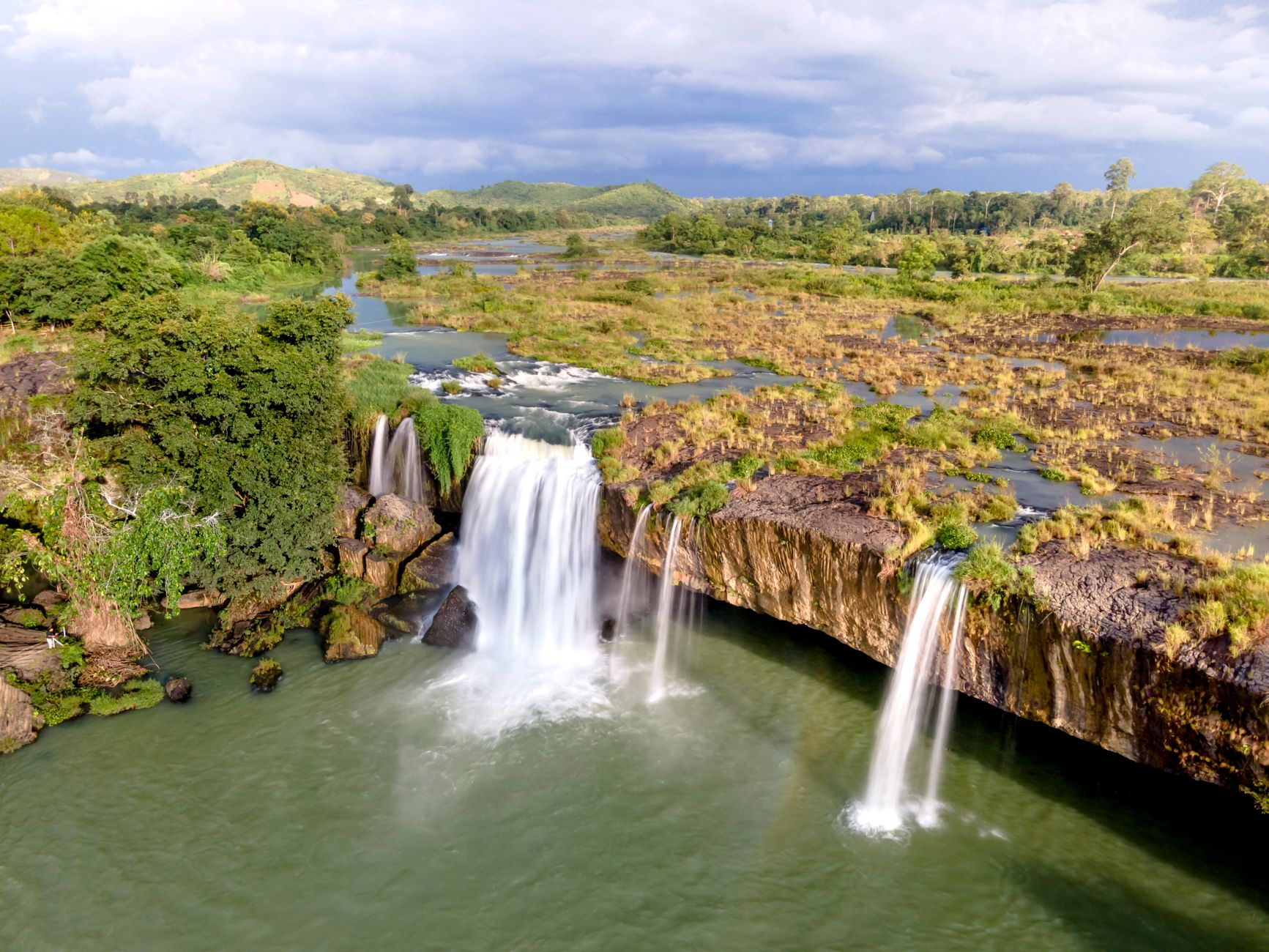
Top 3 Attractions
Skógafoss, Iceland. The 60-meter drop is the headline, but the real hike is the staircase to the right of the falls — 527 steps up to a viewing platform, then a trail that continues along the Skógá River for roughly 8 kilometers past more than twenty smaller waterfalls. Most visitors snap a photo from the base and leave. Walk an hour upstream and you’ll have entire cascades to yourself. The river crossing near the halfway point requires waterproof boots and a bit of nerve; the water is ankle-deep but moving fast.
Ramona Falls, Oregon. Tucked into the Mount Hood National Forest, this 120-foot fan-shaped waterfall spreads across a mossy basalt wall like a curtain. The 11-kilometer loop starts at the Ramona Falls Trailhead and crosses the Sandy River on a log bridge — check conditions, because the crossing is sometimes washed out and requires a detour. The payoff is a waterfall that looks less like a drop and more like a living thing, with water threading through dozens of separate channels. Go early; the parking lot fills by 9am on summer weekends.
Seven Sisters, Norway. Near Geirangerfjord, seven separate falls plunge side by side down a cliff face, the tallest reaching about 250 meters. The best hike isn’t the standard fjord cruise view — it’s the trail from the village of Geiranger up toward Skageflå, an abandoned farm perched on a ledge above the fjord. The path is steep, unmarked in sections, and takes about four hours round trip. You’ll need to arrange a boat shuttle to the trailhead at Skagehola, since the route doesn’t loop back to town. The reward is a view of the Seven Sisters that almost nobody on the cruise ships ever sees.

Insider Tips
- Check flow rates, not just weather. A waterfall after three days of rain is a different beast than the same fall in a dry spell. In Iceland, the Icelandic Meteorological Office publishes river flow data; in Oregon, check the USGS gauge for the Sandy River before committing to the Ramona loop.
- Start before sunrise, not at sunrise. The hour before dawn gets you to the trailhead while the lot is empty and the light is soft. By the time most hikers are lacing up, you’re already at the fall.
- Bring a microspike or trekking poles even in summer. Spray zones around big falls stay slick year-round. I’ve watched more people slip on wet basalt at Skógafoss than on any icy winter trail.
- Don’t trust trail apps alone in Norway. AllTrails coverage of the Skageflå route is patchy and occasionally routes you onto a sheep path. Buy the local paper map at the Geiranger tourist office — it costs about 100 NOK and it’s worth every krone.
- Pack out everything, including fruit peels. Alpine and subarctic ecosystems break down organic waste slowly. An orange peel at 60 degrees north can sit for two years.
Practical Info
Getting there. Skógafoss sits right off Iceland’s Ring Road, about two hours by car from Reykjavík — rent a vehicle, since bus service is limited and slow. Ramona Falls is a 90-minute drive from Portland via Highway 26; a Northwest Forest Pass is required for parking. For the Seven Sisters, fly into Ålesund or Oslo, then take a bus or drive to Geiranger; the boat shuttle to Skagehola runs June through September and costs around 300 NOK round trip.
Best time to visit. Iceland’s south coast peaks June through August, when the highlands trails open and daylight stretches past midnight. Oregon’s Ramona Falls is best July through early October, once snow has cleared the loop. Norway’s Geiranger season is short — late June to mid-August — and the Skageflå trail is genuinely dangerous outside that window due to snow and rockfall.
Budget. Iceland is the expensive one: expect $150–$250 per day for car, fuel, and lodging. Oregon runs $80–$120 per day if you camp. Norway sits in between at $120–$180 per day, with the boat shuttle and fjord-side lodging eating most of it.
Safety. Never turn your back on a waterfall’s spray zone — slick rock and sudden gusts have killed experienced hikers. Tell someone your route and expected return time, especially in Norway where cell coverage drops in the valleys. And if a river crossing looks marginal, it is. Turn around.
A Surprising Fact
Skógafoss hides a legend that locals take half-seriously: when the first Viking settler, Þrasi Þórólfsson, buried a chest of gold behind the falls, the story goes that only the handle was recovered — and that handle now sits in a museum in nearby Skógar. What’s more genuinely surprising is geological. The cliff line behind Skógafoss marks the old coastline, meaning the falls once dropped directly into the sea. The ocean has since retreated about 5 kilometers, leaving the waterfall stranded inland. That’s how fast Iceland’s landscape moves.
Waterfall hikes aren’t about ticking off a list. They’re about the specific sound of 60 meters of water hitting rock, the cold spray on your face after an hour of climbing, and the strange quiet that settles in when you’re the only person there. Pick one of these three, block out a full day, and go early enough that the trail belongs to you. Which one calls to you first? Book the flight, pack the boots, and find out.