Sand gets a bad rap. People fly halfway around the world to stand on a beach made of it, then complain when they find it in their shoes three days later. But the planet’s great deserts — the ones that rearrange themselves overnight and swallow caravans whole — are the most honest landscapes you’ll ever meet. No ornament, no pretence. Just geology, light, and time. I’ve crossed a dozen of them on foot, by 4×4, and once, memorably, by camel. I keep coming back. Here’s where to go, and how to do it without looking like a fool.
Overview
Deserts cover roughly a third of Earth’s land surface, but “desert” is a lazy word. The Sahara alone spans nine million square kilometres and contains gravel plains, salt flats, volcanic peaks and dunes taller than the Eiffel Tower. Namibia’s Namib is the oldest desert on the planet — 55 million years and counting — where fog rolls in off the Atlantic and beetles drink it. Then there’s the Atacama, the driest place outside the poles, where some weather stations have never recorded rain. And the Antarctic Polar Desert, technically the largest desert of all, though you’ll need a parka rather than a sun hat.
What unites them isn’t heat. It’s aridity, and the particular quality of light that comes with it. Low humidity means shadows stay sharp, colours saturate, and stars arrive with unnerving clarity. You don’t need to be an adventurer to enjoy this. You need decent timing, a tolerance for temperature swings, and a willingness to get up before dawn.
Top 3 Attractions
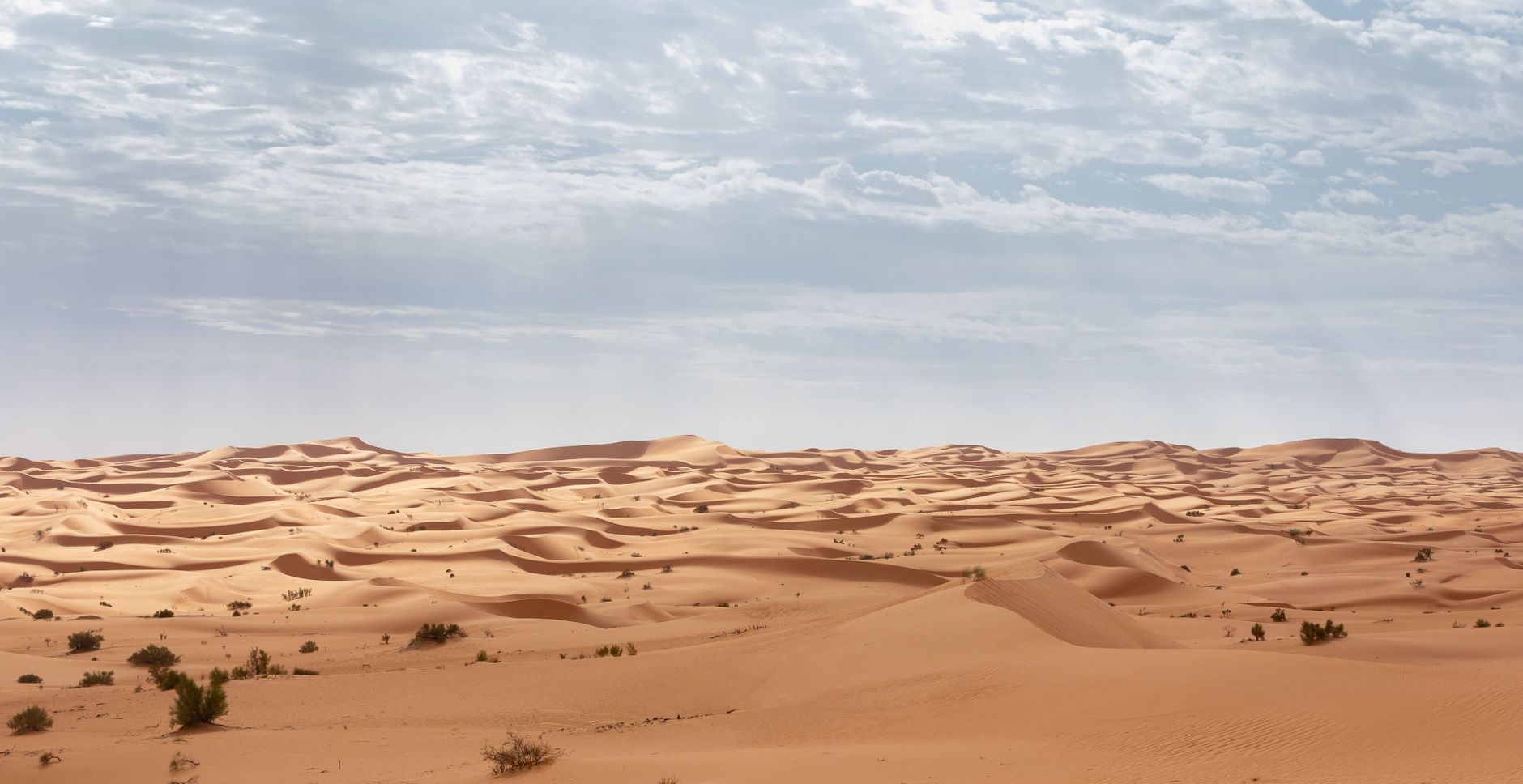
Sossusvlei, Namib-Naukluft Park, Namibia. Those rust-orange dunes you’ve seen on a thousand screenshots? This is the original. Big Daddy stands around 325 metres, and climbing it at sunrise takes about 45 minutes of two-steps-forward-one-step-back misery. Worth every second. From the ridge you look down onto Deadvlei, a white clay pan scattered with 900-year-old camel thorn trees that died when the river changed course and never decayed because it’s too dry for bacteria. Entry to the park is by permit, and the gate at Sesriem opens at sunrise — be there 30 minutes early or you’ll be queuing behind 40 minibuses.
Wadi Rum, Jordan. Not dunes — sandstone and granite monoliths the colour of a bruised plum at dusk, rising straight out of red sand. Lawrence of Arabia filmed here, and so did The Martian, because it genuinely looks like another planet. The trick is to skip the 90-minute jeep tour and book a night in a Bedouin camp deep in the protected area. The silence at 2 a.m., with no generator hum and no light pollution, is the closest thing to sensory reset I know. Bring a headlamp and a decent sleeping bag; desert nights at 1,000 metres are colder than you think.
Salar de Uyuni, Bolivia. Technically a salt flat rather than a dune field, but 10,582 square kilometres of blinding white nothing absolutely belongs on this list. In the wet season (December to March) a thin layer of water turns it into the world’s largest mirror, and the horizon disappears entirely. In the dry season you get the cracked polygon patterns and the surreal perspective-photo playground everyone Instagrams. Go with a licensed operator from Uyuni town — solo driving here is a genuinely bad idea, as the surface is featureless and GPS fails.
Insider Tips
- Chase the shoulder seasons. March–April and September–October give you warmth without the 45°C brutality of midsummer. In the Sahara, February can drop below freezing at night.
- Book the sunrise slot, not the sunset one. Everyone photographs dusk. Dawn gives you cooler air, softer light, and about a tenth of the crowd.
- Carry more water than feels reasonable. Four litres per person per day minimum in hot deserts, and don’t rely on finding resupply. I once watched a very confident German tourist run dry 8 km from his vehicle.
- Learn two words of the local desert language. In Morocco, “shukran” gets you a long way. In Jordan, “shukran” again. Politeness opens doors that money doesn’t.
- Protect your electronics from fine dust. A zip-lock bag for your camera and a lens cloth in your pocket will save your trip. Fine sand destroys zoom mechanisms.
Practical Info
Getting there. Sossusvlei is a five-hour drive from Windhoek on good tar roads, then 60 km of gravel — a 2WD is fine but slow. Wadi Rum is three hours by bus or taxi from Amman, or 90 minutes from Aqaba. Salar de Uyuni is reachable by overnight bus from La Paz (10 hours) or a one-hour flight to Uyuni’s tiny airport.
Best time to visit. Namibia: May to September for dry, clear conditions. Jordan: March to May and September to November. Bolivia: April to November for dry-season access, December to March for the mirror effect, though some tours get cancelled by flooding.
Budget. Namibia runs $150–250 per day for a self-drive with park fees and lodging. Jordan’s Wadi Rum camps range from $40 (basic) to $250 (bubble tents). Bolivia is the cheapest — $80–120 per day including a three-day tour. None of these are backpacker-cheap, but none require a trust fund either.
Safety. The real risks are heat, dehydration, and navigation, not crime. Never hike alone in these environments. Tell someone your route. Carry a paper map because your phone will die or lose signal. And take the flash flood warnings seriously — a dry wadi can fill with a metre of water in 20 minutes from rain falling 30 km away.
A Surprising Fact
Most people assume deserts are expanding relentlessly, but the Sahara has actually been shrinking by roughly 11,000 square kilometres a year since the mid-1980s, according to satellite data from NASA and the University of Maryland. Greening is happening along the southern edge, driven partly by rainfall shifts and partly by farmer-led land restoration in the Sahel. The desert isn’t the villain of every climate story — sometimes it’s the one quietly retreating.
So here’s my counter-intuitive take: the best desert trip isn’t the most remote one. It’s the one where you actually stop moving. Everyone races between viewpoints, ticking off dunes like Pokémon. The people who come back changed are the ones who sat still for four hours and watched the light move across a single ridge. Do you really need to see five deserts, or would one, properly seen, be enough?
Pick one. Go in the shoulder season. Book the Bedouin camp, the sunrise permit, the three-day salt flat tour. Pack two litres more water than you think you need. Then put the camera down for an hour and just listen to nothing at all. That’s the desert. Everything else is just sand.