Island Hopping in the Philippines: A Guide to the Archipelago’s Wild Heart
Forget what you’ve seen on Instagram. The Philippines isn’t just about white sand and coconut trees—though it has those in absurd abundance. It’s about the chaotic ferry schedules, the taste of grilled squid bought from a boat, and the moment you realise you’re the only person on a beach that stretches for miles. With over 7,600 islands, you could spend a lifetime and still miss most of it. I’ve spent twelve years chasing these shores, and I’m here to tell you: skip Boracay’s crowds and head for the edges. This guide cuts through the noise, giving you specific routes, honest budgets, and the kind of local knowledge that turns a trip into a story.
Overview
The Philippines is less a single destination and more a sprawling maritime puzzle. Each island group—Luzon, Visayas, Mindanao—has its own personality, its own food, its own rhythm. The classic route for first-timers runs south from Manila: Coron, El Nido, then across to Cebu or Bohol. That loop works, but it’s become a well-worn highway. The real magic lives in the spaces between the famous spots—the fishing villages, the reef breaks, the islands that don’t even have a name on Google Maps.
Think of island hopping here as a two-speed game. You can do the fast version: book a shared boat tour, tick off lagoons and snorkel spots in a day. Or you can do the slow version: hire a bangka (outrigger boat) for two or three days, pack a hammock, and let the captain decide where to sleep. The latter takes more patience and more cash, but it rewards you with solitude. No tour operator will ever show you the sandbar that only appears at low tide, unless you’re willing to get lost to find it.
Top 3 Attractions
1. The Hidden Beach of Coron, Palawan. Most people do the Coron town tour and think they’ve seen it. They haven’t. The real prize is a spot called Hidden Beach, accessible only by a small boat that threads through a gap in the limestone cliffs. The water is so clear it looks like air, and the sand is a fine, squeaky white. Go early—before 8am—and you’ll have it nearly to yourself. The swim through the narrow entrance feels like a secret handshake. Bring a dry bag; you’ll need it for the splash.
2. The Enchanted River of Siargao’s Wild Side. Everyone knows Siargao for surfing Cloud 9. But on the island’s southern tip, near the town of General Luna, there’s a river that changes colour with the tide—a deep, electric blue that looks painted. It’s called the Sugba Lagoon, and while it’s not entirely off the map, most surfers never bother to paddle inland. Rent a kayak and drift past mangrove tunnels. The silence is broken only by the call of kingfishers. It’s a different kind of thrill than a wave, but just as addictive.
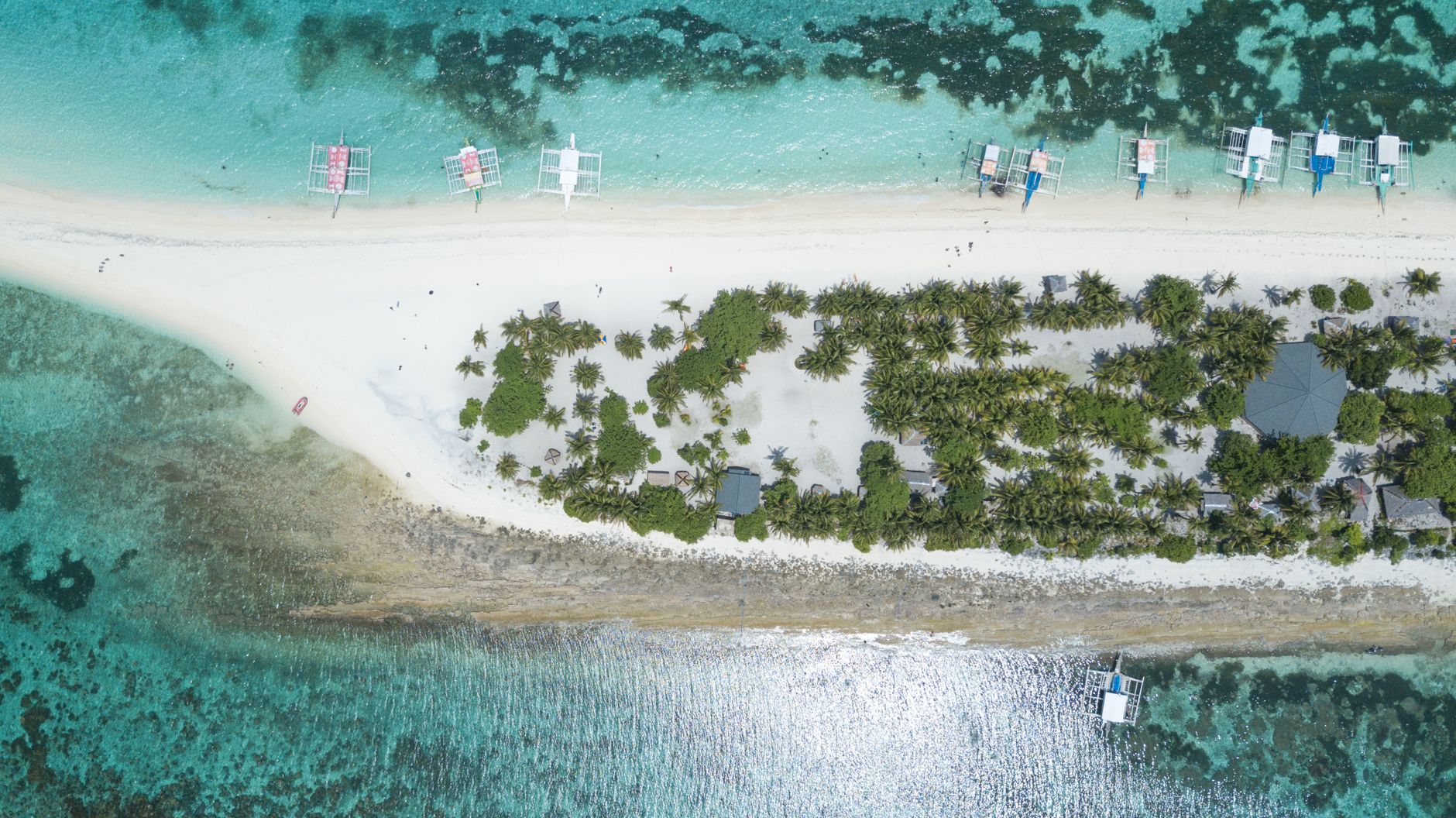
3. The Sandbars of Kalanggaman, Leyte. This one is a two-hour boat ride from the mainland, and it’s worth every bump. Kalanggaman is a long, thin spit of white sand that disappears under water at high tide. There are no resorts, no restaurants—just a ranger hut and a stretch of beach that feels like the edge of the world. Pack your own lunch, bring water, and prepare to wade ashore. The snorkelling on the drop-off is decent, but the real show is the horizon. You’ll see nothing but sea in every direction.

Insider Tips
Skip the hotel breakfast. Wake up early, walk to the nearest market, and buy a banana cue (caramelised plantain on a stick) and a cup of strong, sugar-laden coffee. It costs less than a dollar, and you’ll eat like a local while the tour boats are still loading.
Never, ever book a shared tour from the dock on a whim. The prices look cheap, but the boats are packed, the stops are rushed, and you’ll spend half the day waiting for slow swimmers. Instead, find a group of four to six travellers and charter a private boat. It costs double, but you set the pace. You can linger at a snorkel spot for an hour or skip a crowded lagoon entirely.
Bring your own snorkel mask. The ones provided on rental boats have seen better days—often fogged, sometimes leaky, and rarely sanitised. A decent mask costs about $30 and fits your face. That simple upgrade changes your whole experience underwater.
Understand the weather windows. The Philippines has no true winter, but the seas get rough from November to February in the eastern Visayas. If you’re set on Siargao or Kalanggaman, go between March and May. Palawan is more sheltered, so it’s a safer bet year-round, but June to October brings rain. Plan your itinerary around the prevailing winds, not just the calendar.
Carry small bills. Many island vendors and boatmen can’t break a 500-peso note (about $9). You’ll waste time and goodwill hunting for change. Keep a stash of 20s and 50s for tips, entrance fees, and the occasional coconut sold from a canoe.
Practical Info
Transport: The backbone is the ferry network. Fast craft connect major islands, but they’re not always on time—so build slack into your schedule. For remote spots, you’ll rely on bangka boats. Negotiate a price per trip, not per hour, and confirm it includes fuel. Domestic flights are cheap if you book two weeks ahead; Cebu Pacific and AirAsia are the workhorses. Avoid the overnight bus between Manila and the southern ports—it’s slow, hot, and eats a full day.
Best Time to Visit: March to May is the sweet spot. The dry season is in full swing, the seas are calm, and the water visibility hits its peak. December and January are also fine but bring bigger crowds and higher prices. Typhoons are a real risk from June to September—check the PAGASA forecast daily if you’re travelling then.
Budget: You can island-hop on $40 a day if you stay in hostels, eat street food, and share boats. Mid-range travellers should budget $70–100 daily for private rooms, restaurant meals, and private charters. The biggest hidden cost is the “environmental fee” charged at almost every island—usually 100–300 pesos ($2–6). It adds up over a week.
Safety: The Philippines is safer than its reputation suggests, but keep your wits. Don’t flash expensive gear in crowded ports. Stick to well-known ferry lines, not the rickety outriggers that operate after dark. Tap water is not drinkable anywhere—always buy bottled. And be honest with yourself about your swimming ability. Currents can be strong around the sandbars, and there’s no lifeguard on the reef.
A Surprising Fact
Here’s what almost nobody tells you: the Philippines has more than 7,600 islands, but most of them are completely uninhabited and have no fresh water source. That’s why the locals don’t live on the postcard-perfect sandbars you see in the photos. They live on the bigger, greener islands with rivers and wells. The stunning, isolated beaches you’re hopping between are beautiful precisely because they’re unlivable. So when you’re sipping a coconut on a deserted stretch of sand, remember—you’re enjoying a place that would kill you if you stayed too long. That’s the weird, wonderful trade-off of this archipelago.
Now, the only question left is whether you’ll let the ferry schedules scare you off. They’re chaotic, sure. The boats run late, the weather shifts, and the plans you made will change. But that’s the point. The best islands aren’t the ones you booked in advance—they’re the ones you find because a boat captain pointed at a speck on the horizon and said, “There’s a good beach there.” Buy the ticket, pack light, and trust the sea. It’s been carrying travellers to these shores for centuries, and it’s not about to stop now.