The Only Safari Planning Guide You’ll Ever Need: Africa’s Wild Heart, Decoded
Forget the postcards and the drone shots. A safari is the last great adventure where you are genuinely not in control—and that’s exactly why you should go. Twelve years chasing dust devils across the savanna taught me this: the difference between a trip you survive and a trip that rewires your brain comes down to planning. Not luck. Not money. Planning. This guide cuts through the brochure fluff to give you a raw, practical blueprint for tracking lions, sleeping under a billion stars, and doing it all without blowing your budget or your patience. Ready to get dust in your boots?
Overview
Africa isn’t a country, and a safari isn’t a single thing. It’s a spectrum—from the raw, endless plains of Tanzania’s Serengeti to the swampy, papyrus-choked waterways of Botswana’s Okavango Delta. Each ecosystem has its own rhythm. East Africa delivers the classic migration drama: massive wildebeest herds, open horizons, and a sense of scale that makes your hometown feel like a closet. Southern Africa—particularly South Africa and Namibia—offers easier access to luxury, solid self-drive options, and desert-adapted elephants wandering through lunar landscapes.
Your first decision isn’t which lodge to book. It’s which *country* fits how you travel. Do you want a guide 24/7 in a 4×4, or the freedom of a rented Hilux with a tent on top? The good news? Both work. The bad news? Most first-timers cram four countries into ten days and end up seeing more airport lounges than wildlife. Slow down. Pick one region. Give it a week. That’s the secret.

Top 3 Attractions
1. The Ngorongoro Crater, Tanzania. This isn’t just a crater—it’s a self-contained ark. The floor is a 260-square-kilometer bowl where the walls act as natural fencing, making the Big Five (lion, leopard, rhino, elephant, buffalo) almost guaranteed sightings. I once watched a pride of lions take down a zebra at 7 AM while a black rhino grazed 200 meters away, entirely indifferent. It’s the highest density of predators on the planet. The catch? It gets crowded. Get to the descent gate at 6 AM sharp, before the tour buses roll in, and you’ll have the floor to yourself for two magical hours.
2. The Okavango Delta, Botswana. Forget the jeep. Here, you glide silently through reed-lined channels in a traditional mokoro (dugout canoe). The water is so still it mirrors the sky, and you’ll paddle within meters of yawning hippos, sunning crocodiles, and elephants crossing thigh-deep. The birdlife is obscene—malachite kingfishers, African fish eagles, and the prehistoric-looking shoebill stork if you’re lucky. This is a water safari, and it changes the game. You hear the swamp breathe. You smell the jasmine on the breeze. It’s more meditation than adrenaline.
3. South Luangwa National Park, Zambia. This is the birthplace of the walking safari, and it remains the best place on Earth to do it. You leave the vehicle behind and move on foot with an armed scout. The thrill isn’t just seeing a leopard—it’s smelling the fresh carcass in a tree above your head, or hearing a branch crack and realizing a herd of buffalo is 30 meters away, hidden by thicket. The park is famous for night drives too, where you’ll spot elusive pangolins and the rare Thornicroft’s giraffe, which exists nowhere else. It’s raw, it’s real, and it’s for the traveler who wants to *feel* the wilderness, not just photograph it.

Insider Tips
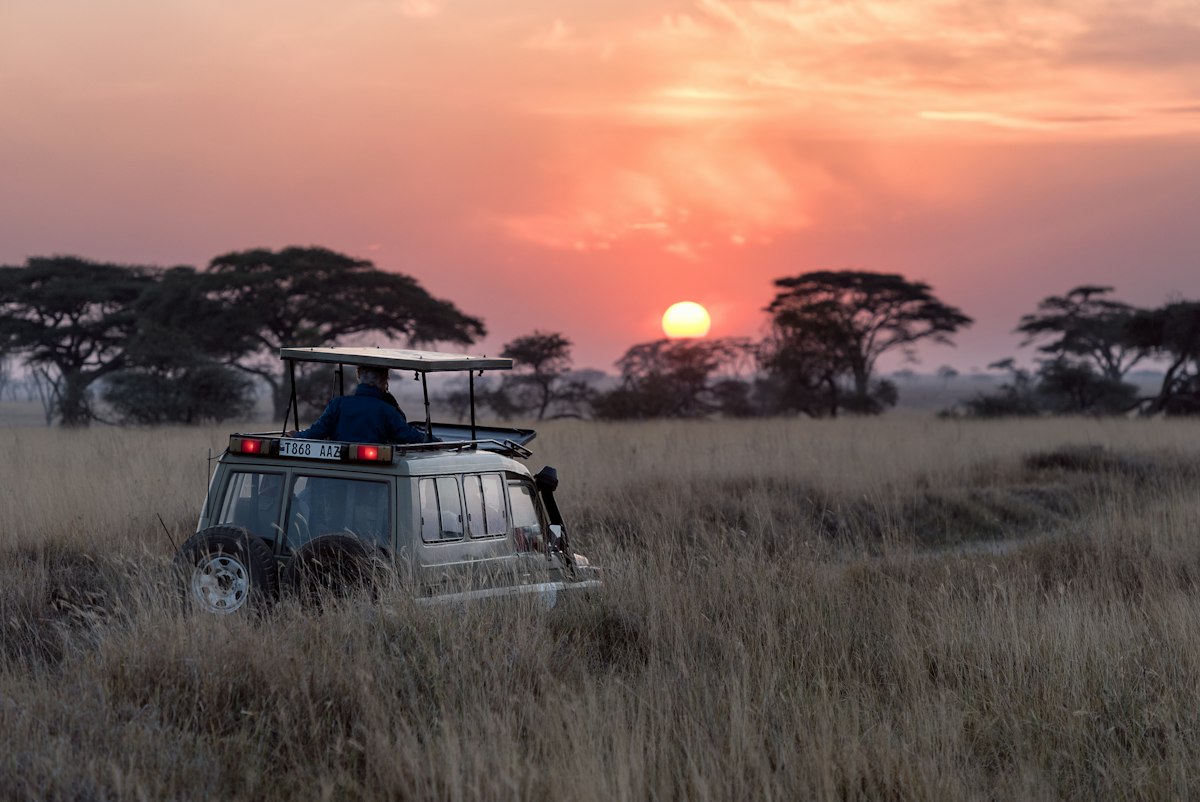
First, pack a buff or a shemagh, not a wide-brimmed hat. The dust in game reserves is so fine it gets everywhere—your ears, your camera, your soul. A neck gaiter pulls up over your nose during high-speed drives and protects your lungs better than any hat. Second, ask your guide to kill the engine at every sighting. Silence attracts animals. The diesel rumble scares off the shy ones, and you’ll see twice as much if you just sit still and listen for ten minutes.
Third, don’t book a “luxury” lodge for your first safari. Book a *tented* camp. Canvas walls mean you hear hyenas whoop at 2 AM and elephants munching trees right outside your veranda. That sound beats a marble bathroom any day. Fourth, bring two cameras. One with a 400mm+ lens for the animals, one with a 35mm for the human moments—the campfire, the guide’s grin, the sundowner gin and tonic. You’ll kick yourself if you only have the big lens for everything.
Last tip: tip your guide in local currency, not dollars. In Tanzania, give shillings. In Botswana, pula. It goes further for them, and they appreciate the thoughtfulness. A good guide gets $10-15 per day per guest. Pay it. They’re the ones who kept you from walking into a leopard’s breakfast.
Practical Info
Getting around: Fly into Nairobi (Kenya), Kilimanjaro (Tanzania), or Johannesburg (South Africa) as your main hubs. From there, use small charter planes like Safarilink or Air Excel—they hop between airstrips and save you days of terrible dirt-road driving. On a budget? Self-drive in South Africa’s Kruger National Park is excellent; the roads are paved and well-marked. Avoid self-driving in Tanzania or Zambia. The roads are punishing, and you’ll miss half the wildlife while staring at potholes.
Best time to visit: For the Great Migration in the Serengeti, July to October is prime—the herds cross the Mara River. But that’s peak season with peak prices. Consider November instead. The “short rains” bring fresh grass, the animals scatter, and you’ll have the parks to yourself. For Botswana, the dry season (May to October) is best for water activities because floodwaters peak. My contrarian opinion? Go in January. It’s hot, it’s humid, but the birding is spectacular and the baby animals are everywhere—it’s calving season.
Budget reality: A mid-range safari costs $300-500 per person per day, all-inclusive. That covers lodging, meals, game drives, and park fees. Luxury runs $800-1,500. Budget camping can be done for $100-150, but you’re trading comfort and safety for savings. Park fees are the hidden killer—they’re steep (often $70-100 per person per day) and non-negotiable. Book through a local operator, not a Western one, to cut out the 30% middleman markup.
Safety: The wildlife is the danger, not the people. Listen to your guide. Never stand up in an open vehicle. Never walk at night unescorted. Malaria is real—take prophylactics (Malarone is best, no dreams) and use DEET. The locals are overwhelmingly friendly and welcoming. Crime against tourists in national parks is virtually nonexistent.
A Surprising Fact
The most dangerous animal in Africa isn’t the lion or the elephant. It’s the hippo. They kill more people annually than any other large mammal—around 500 deaths per year. They’re herbivores, but fiercely territorial, and they can outrun you on land despite weighing 3,000 pounds. The counter-intuitive part? They’re also the reason the Okavango Delta exists as a wildlife haven. Their massive dung fertilizes the waterways, which feeds the fish, which feeds the birds, which feeds the crocodiles. The whole ecosystem is a hippo-managed farm. So when you’re gliding past a pod in your mokoro, give them the respect they demand—and keep your hands inside the boat.
You’ve got the map, the budget, and the mindset. The only thing left is to commit. Pick a date, book a flight, and let the wild do the rest. Africa isn’t a place you visit; it’s a place that visits you, long after you’ve landed back home. So stop scrolling, start packing, and I’ll see you at the waterhole.